
NSW Rental Reform
Recent changes to New South Wales (NSW) rental laws are reshaping the renting landscape — and in my view, these are the biggest changes in recent memory. These reforms have significant implications for landlords across the state, affecting rent increases, lease endings, pets, and fees. The main changes started on 31 October 2024 and 19 May 2025, with a further payment rule starting on 2 March 2026.
Why did NSW tenancy laws change?
This isn't the first time rental laws have changed. Over the years, reforms have gradually reshaped how landlords and tenants interact, as the government aims to balance rights on both sides – never an easy task.
If you have been a landlord for more than 5 years, you might remember:
- The ban on soliciting rent bidding by agents
- The introduction of water efficiency requirements for charging tenants
- The 2020 introduction of minimum standards for rental properties
- Minor alterations allowed by tenants without owner approval
- The "once per 12 months" rent increase rule for periodic leases
Now, we’re seeing the most significant overhaul yet. The Minns Labor Government says it’s all about creating a fairer rental environment for the more than 2.2 million rental properties across the state.
When do the new NSW tenancy laws start?
The NSW tenancy law changes started in stages. The rent increase cap and fee bans started on 31 October 2024, the no-grounds eviction ban and pet rule changes started on 19 May 2025, and the Centrepay requirement started on 2 March 2026.
Will the new NSW tenancy laws affect current rental agreements?
Yes. The main reforms apply to all residential tenancy agreements, including existing fixed-term and periodic agreements. This means current tenancies are affected, not just new leases signed after the law changes began. If a termination notice was issued before 19 May 2025, it remains valid under the old law if it was lawfully given at the time.
No-grounds evictions are no longer allowed
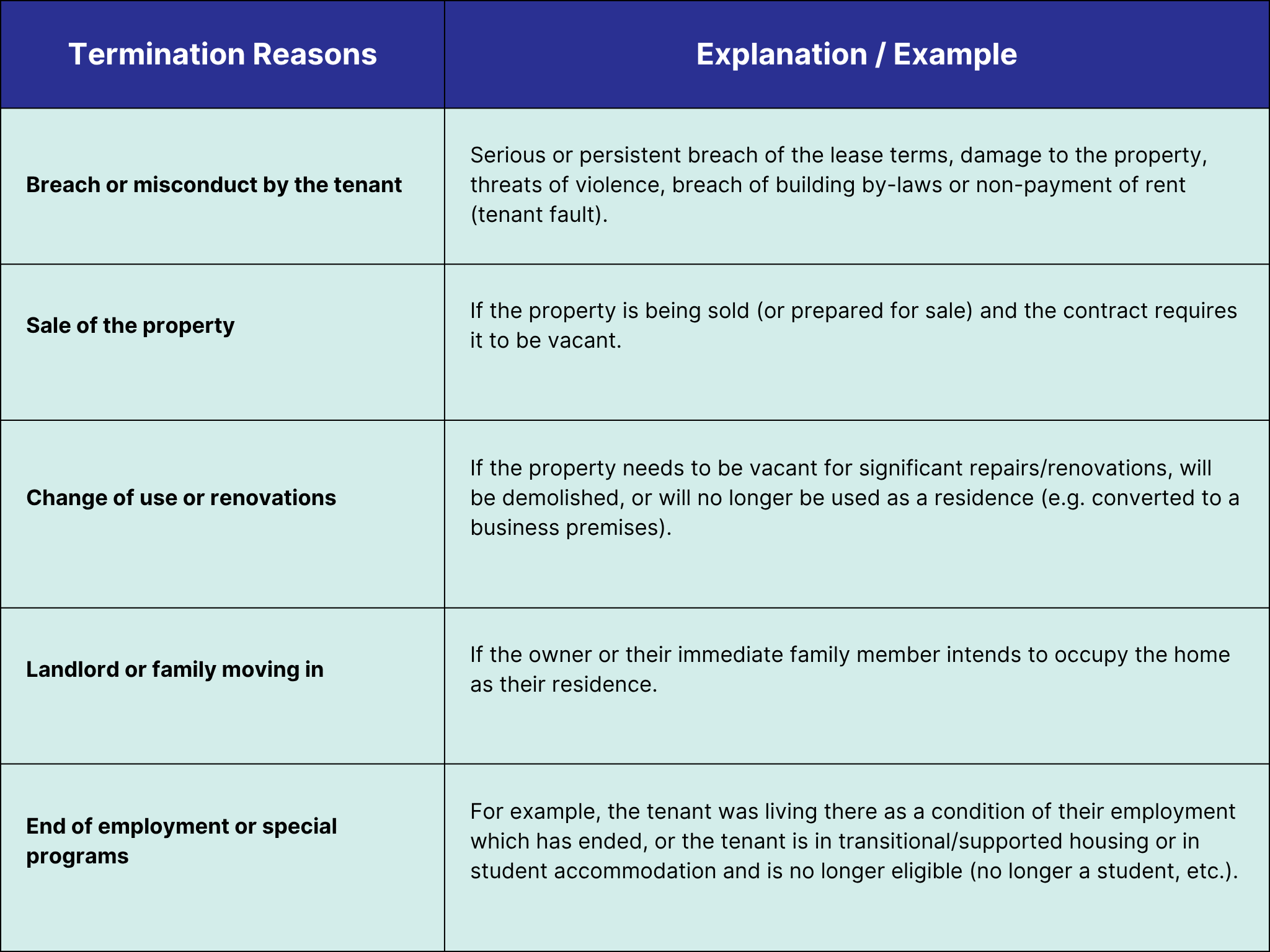
Possibly most controversial change. Landlords can no longer use "no grounds" to terminate a lease – whether it's the end of a fixed term or a periodic agreement. To terminate a tenant the landlord must provide a valid reason.
Valid reasons can include the property being sold, the landlord or family moving in, significant renovations or repairs, demolition, tenant breach, or the property no longer being used as a rental.
This change applies to both fixed-term and periodic tenancies.
How much notice to end lease NSW?
The notice period depends on the type of tenancy and the reason for termination.
For a fix term lease of 6 month you must give 60 days —> changed from 30 days previously
For a fix term of more than 6 month, you must give 90 days —> changed from 30 days previously
Actual sale of property remains unchanged at 30 days notice period
Serious breaches of lease agreements remains unchanged at 14 days notice period
What is a periodic tenancy?
A periodic tenancy is an ongoing rental agreement that continues after a fixed term ends until either the tenant or landlord ends it under the legal notice rules. It is sometimes called a periodic lease or month-to-month tenancy.
Under the new NSW tenancy laws, periodic agreements are subject to the same no-grounds eviction ban and rent increase rules as fixed-term leases.
Making sure your notice of termination is valid
The process of issuing a termination notice has also changed. Landlords are now required to include an information statement with any notice — this outlines both the tenant’s rights and the landlord’s responsibilities when ending a tenancy.
In cases where the termination is based on specific reasons (such as the sale of the property), you must also attach supporting evidence. For example, if you're ending a lease due to a sale, documentation like a signed contract of sale may be required to validate the notice.
Reletting restriction
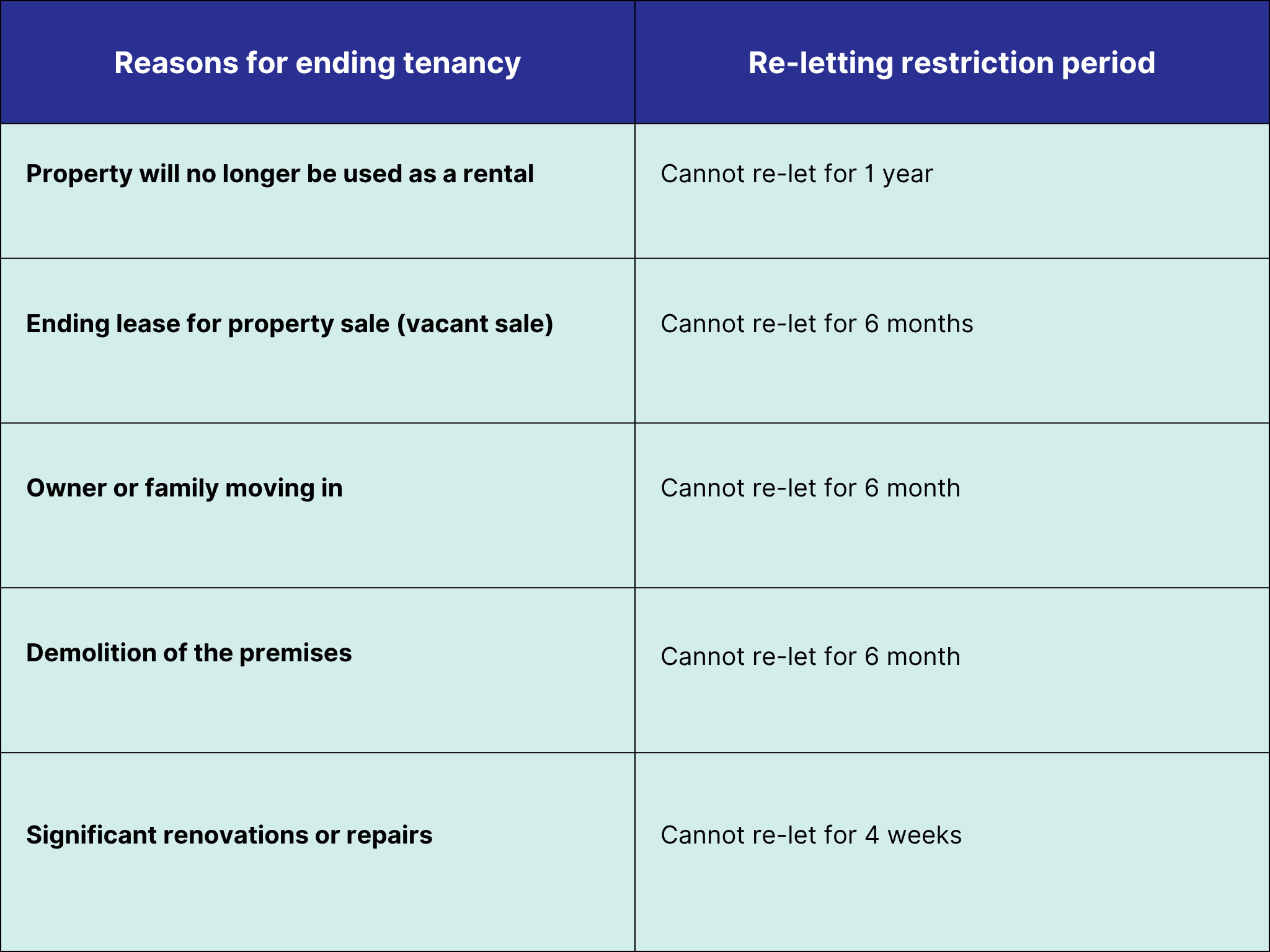
In a bid to prevent abuse of the termination reasons, there’s now a mandatory waiting period before you can re-let your property — and the length of that period depends on why the lease was ended.
If your situation changes and you need to re-let sooner, you’ll need to apply to NCAT (NSW Civil and Administrative Tribunal) to lift the restriction on the property.
You can find the current re-letting restriction periods based on termination reasons below:
Pet rules in NSW rentals
Pets have quickly become part of the family for many tenants, and this amendment recognises that by giving renters the right to request a pet in their rental home.
Under the changes, once a formal pet request is received, the landlord must respond within 21 days. If no response is given in that time, the application is automatically deemed approved.
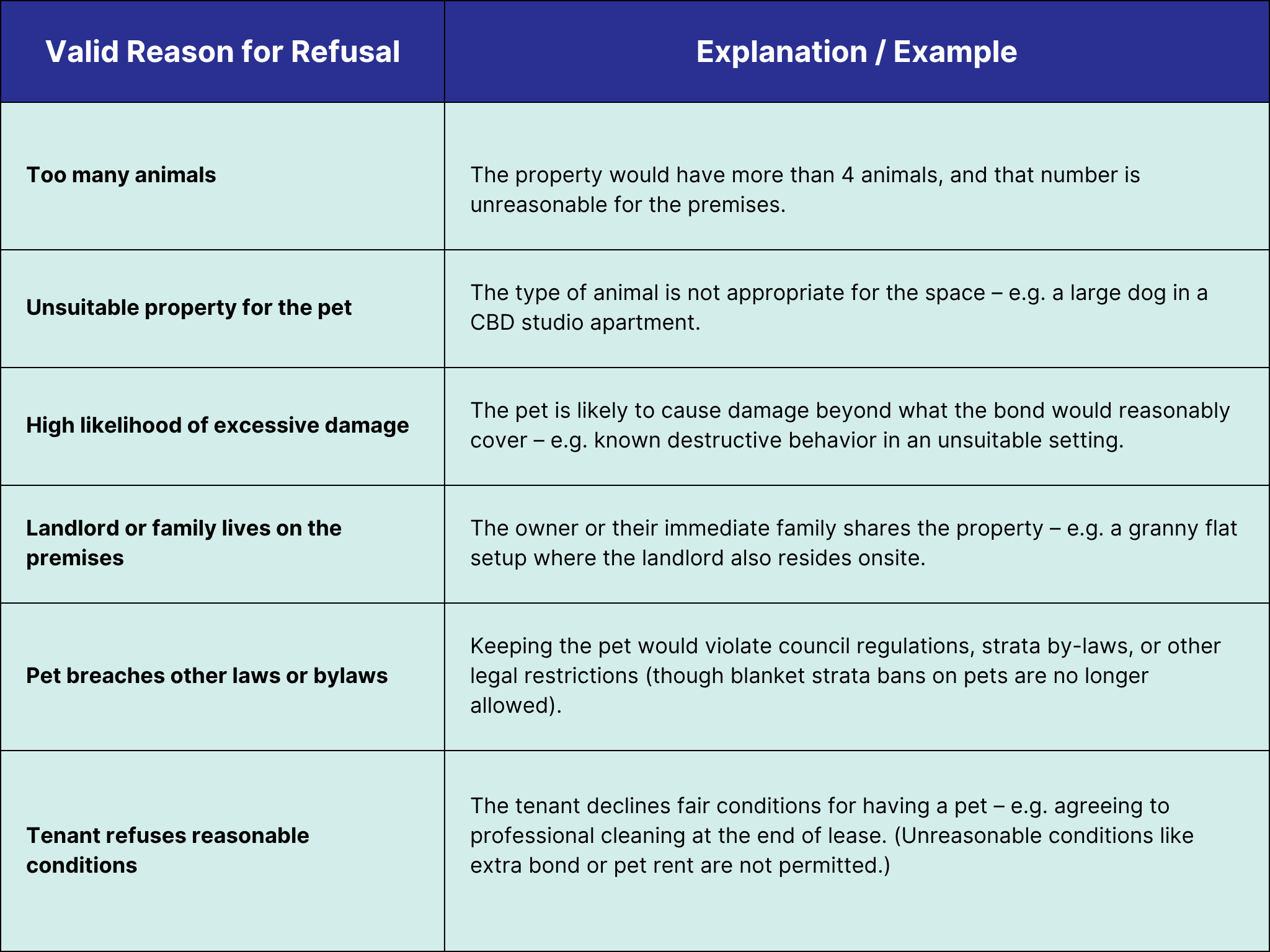
While landlords cannot unreasonably refuse a pet, there are valid grounds for declining a request if the pet is genuinely unsuitable for the property. Below are a list of reasons for refusing a pets application
Fees banned at the start of a tenancy
From 31 October 2024, landlords and agents can no longer charge tenants for background checks or tenancy agreement preparation fees. These extra upfront fees were banned as part of the rental law changes.
From 19 May 2025, tenants must also be offered at least one fee-free electronic payment method, such as a direct bank transfer, for paying rent.
Rent increase once every 12 month
Regardless if your tenant is coming off a fixed term lease or on a periodic lease, the rent can only be increase once every 12 month, previously the once per 12 month rent increase only applies to periodic leases or fixed-term leases of over 2 years.
Water efficiency requirements (Effective March 2025)
A change aimed at improving water efficiency — from March 2025, if you're passing on water usage charges to your tenant, all toilets in the property must be dual-flush with a minimum 3-star WELS rating. This rule was legislated some time ago with a long lead time, but the compliance deadline has now arrived. If your property still has older single-flush or inefficient toilets, you won’t be able to continue charging for water usage until those are upgraded.
If you do pass on water bills, it’s a good idea to check — or have a plumber check — your toilets, taps, showerheads, and other fixtures to ensure they meet the required efficiency standards.
Quick tips on navigating the new law:
These changes aim to make renting fairer for more than 2.2 million tenants across NSW. As a landlord, you can navigate this new landscape by understanding what’s changed, planning ahead when issuing notices, and maintaining regular communication with your tenants to ensure they’re happy — and that your property is being well looked after.
It also means putting more consideration into tenant selection, as it’s now more likely you’ll be forming longer-term relationships with the people you approve for your property.
Since the start of the reform rollout earlier this year, our team has been helping landlords adjust to these changes. To all our landlords and tenants — thank you for being part of our community. We believe these reforms are a step in the right direction for building a fairer, more stable rental environment for everyone.
Frequently Asked Questions
Common questions from SRG landlords and tenants about NSW tenancy laws.
Need help navigating the new NSW tenancy laws?
Our property management team is across every change and here to help. Reach out to us at support@sydneyrealtygroup.com.au
Disclaimer: All information in this knowledge base is believed to be in line with current laws and regulations. Should these laws change in the future, the information provided may become outdated and no longer valid. This article is intended as a general guide only and is not an authoritative resource or a guarantee of specific outcomes. We recommend conducting your own research and seeking legal advice where necessary.